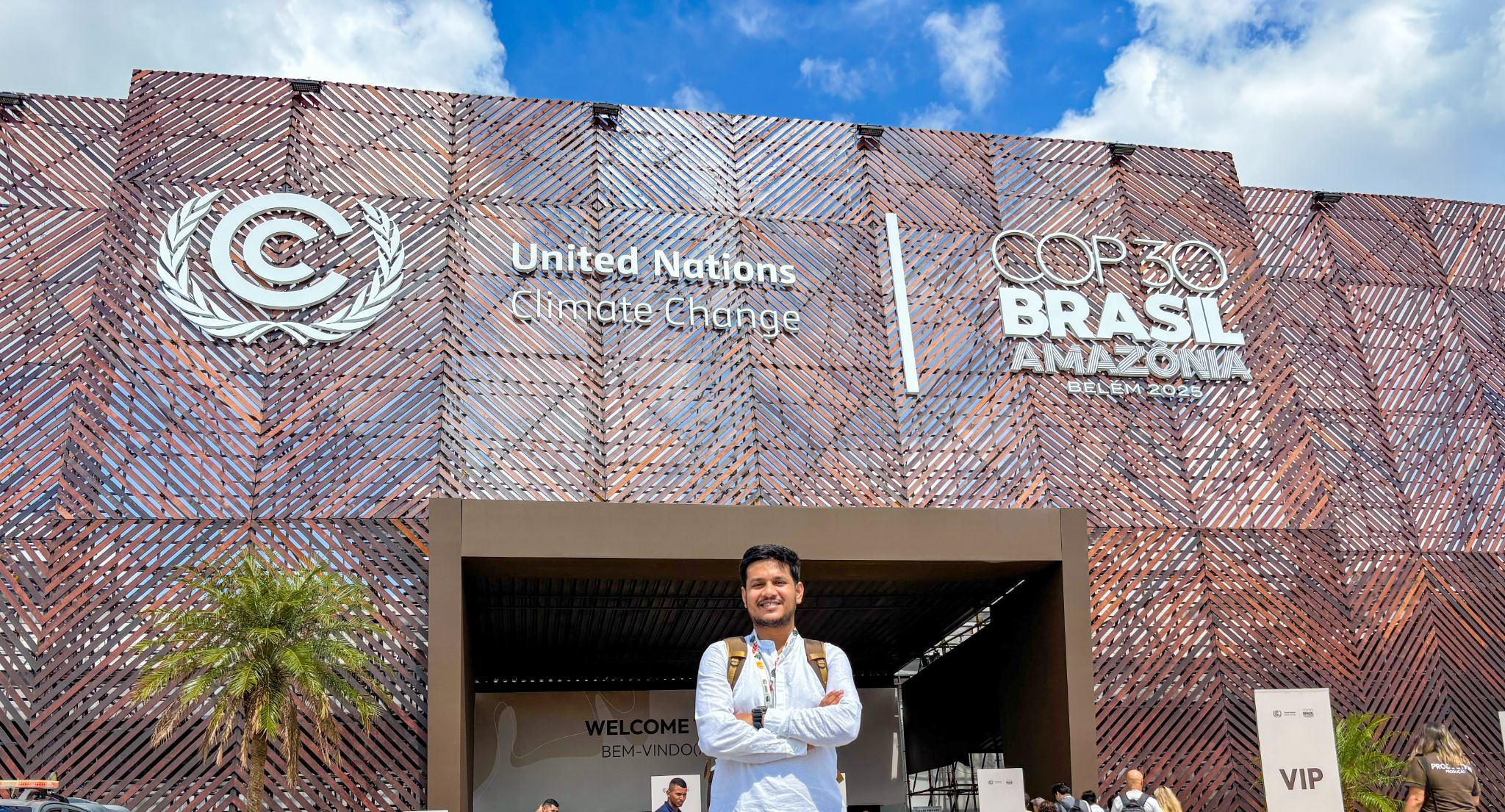
Shohan Ur Rahman completed his Honours and Masters degrees in Oceanography from Shahjalal University of Science and Technology, Sylhet. He is currently employed in Center for Participatory Research and Development (CPRD) which is a “Policy Research Think Tank” that does policy research and policy advocacy. CPRD’s primary focus is on Climate Change and many domains related to climate change such as adaptation, mitigation, loss and damage and also biodiversity nexus which is getting an increased focus in recent times. Shohan was an observer at the 2025 United Nations Climate Change Conference (COP30). Oceanopedia interviewed him to learn about his experience.
Can you give readers a brief introduction to what COP is? COP or Conference of the Parties are multifaceted conferences. One of these conferences is primarily focused on climate change. There is also a biodiversity focused COP and another focused on the environment. The main authority of COP is the UN and through different agreements through different parties (countries) they organize these conferences. For instance, The COP for Climate Change is organized by UNFCCC (United Nations Framework Convention on Climate Change) whose chief concern is Climate Change and every kind of action regarding Climate Change is done under their supervision.
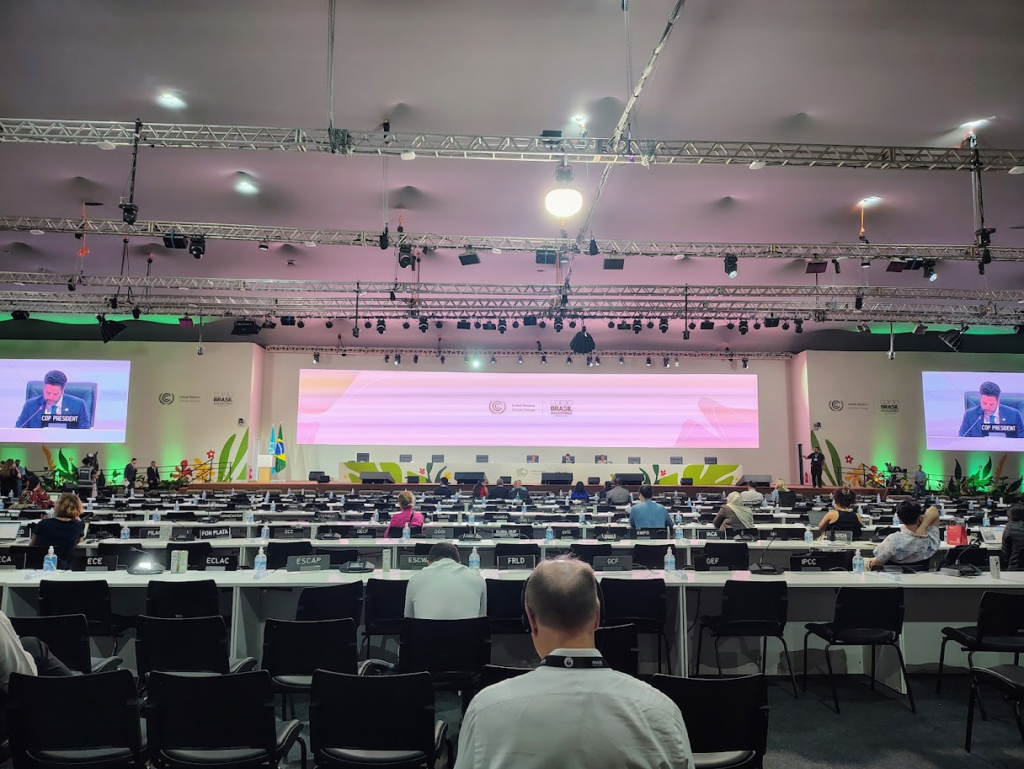
How does COP actually work? What happens during these conferences? Agendas for the conference are set during the planning phases. At COP30, there were over 100 agendas. Because it was held in Brazil, biodiversity and indigenous communities were central. The main agendas span climate change adaptation, mitigation, and loss and damage, with interconnected sub-sections on gender, biodiversity, and the ocean-climate nexus.
After every COP, the UNFCCC publishes a document containing everything agreed upon by all parties and the resulting action plans. At COP30, the overarching theme was “Global Mutirão” a Brazilian term and that document captures all decisions made under it.
Different country groupings also bring their own demands. Bangladesh is represented in the Least Developed Countries group. These groupings put forward demands, which are then debated and negotiated among parties. In practice, there is an enormous amount of diplomacy and politics involved, even the wording of individual sentences can keep negotiators up all night. At one point, developed countries spent considerable time debating whether a document should use “shall” or “should.” These procedural details slow down decisions on genuinely urgent matters.
How did you get the opportunity to attend COP30? CPRD – my employer – sends delegates to COP every year. As a non-governmental organisation, we attend as observers rather than as party representatives. I attended as a representative of Bangladesh through CPRD. My reason for going was tied to an active research project. The agenda was to present our ground-level findings on a global platform.
Is it possible to share some details about the findings you presented? The concept or the results that I got to share on the ‘COP30’ was on “Climate Change Impact on Women’s Reproductive Health.” Everyone knows that sea level is rising due to climate change and the salinity in coastal areas is increasing. Due to this, there is an impact on the health of women along these regions, particularly adolescent girls and middle aged women who are in their reproductive ages. These coastal women spend a significant amount of time close to saline water, either through drinking, washing the utensils, catching fish and crabs, and similar activities. Through our research, we are attempting to see if they are really getting affected by their exposure to saline water. It is still at a hypothesis stage – many reports and researches mention this to be the case but there has yet been no empirical proof of this. In CPRD, we are trying to find the evidence for this by collecting a large sample in the coastal region.
So, being a part of this project allowed you to attend COP? Yeah. A component of this project was that we would share the research findings in COP as a representative of my organization and share the result in various events of the COP in front of the global community to inform them about the situation that the women in the coastal region of my country are facing.
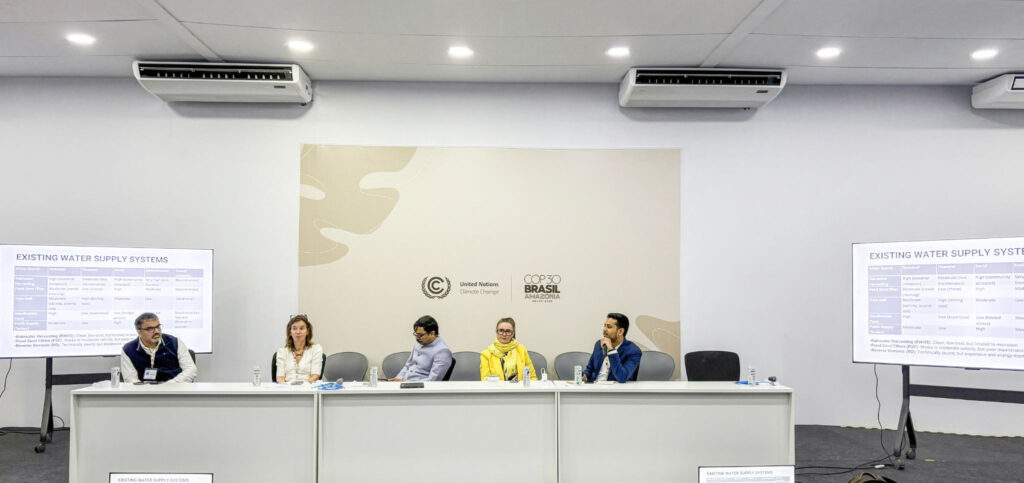
How much priority did the ocean receive at COP30? The ocean is relatively new to the COP agenda. Historically, before COP20, the ocean was barely featured. Early discussions focused heavily on forests as carbon sinks. The biodiversity COP and a recent ocean conference in France gradually shifted attention toward the ocean. At COP30, I felt the global community was far more engaged on ocean issues than before. I contributed to the position paper published by Climate Justice Alliance Bangladesh ahead of this COP arguing that the ocean should be at the forefront of negotiations, and I was encouraged to see that concern reflected. The ocean absorbs the largest share of carbon and covers two-thirds of our planet, the case for making it central to climate negotiations is obvious.
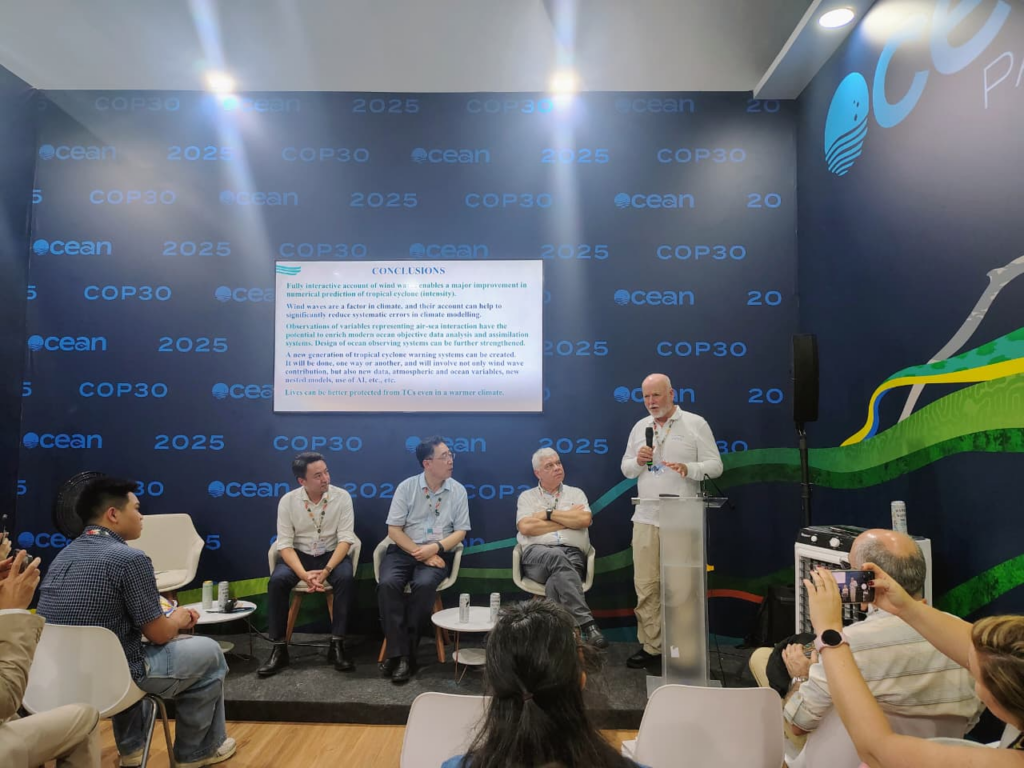
Photo: Side event at Ocean Pavilion at COP30
Why is Bangladesh’s participation in COP important, and what were the country’s main priorities at COP30? Bangladesh is among the most climate-vulnerable countries in the world. The evidence is visible now with intensifying cyclones, droughts, saltwater intrusion into freshwater sources, and accelerating impacts on ecosystems like the Sundarbans. The developed world industrialised on the back of massive carbon emissions and continues to do so. The consequences fall disproportionately on countries like ours. Our participation is fundamentally about holding those responsible to account and ensuring our voice shapes the response.
On specific priorities: loss and damage is the most urgent for Bangladesh. There are two types of climate hazard; (i) slow onset and (ii) sudden onset. The sudden ones, like the devastating floods in Feni last year, make the damage plainly visible. At COP, Bangladesh negotiates for loss and damage funds to help communities recover. Around 100 billion dollars was promised at a previous COP, almost none of it has materialised. Adaptation funding is also critical. In terms of mitigation, there is genuine scope, Bangladesh has a large coastline, mangrove forests, and tropical vegetation, all of which are significant carbon sinks, but adaptation tends to receive greater focus because the funding is more accessible.
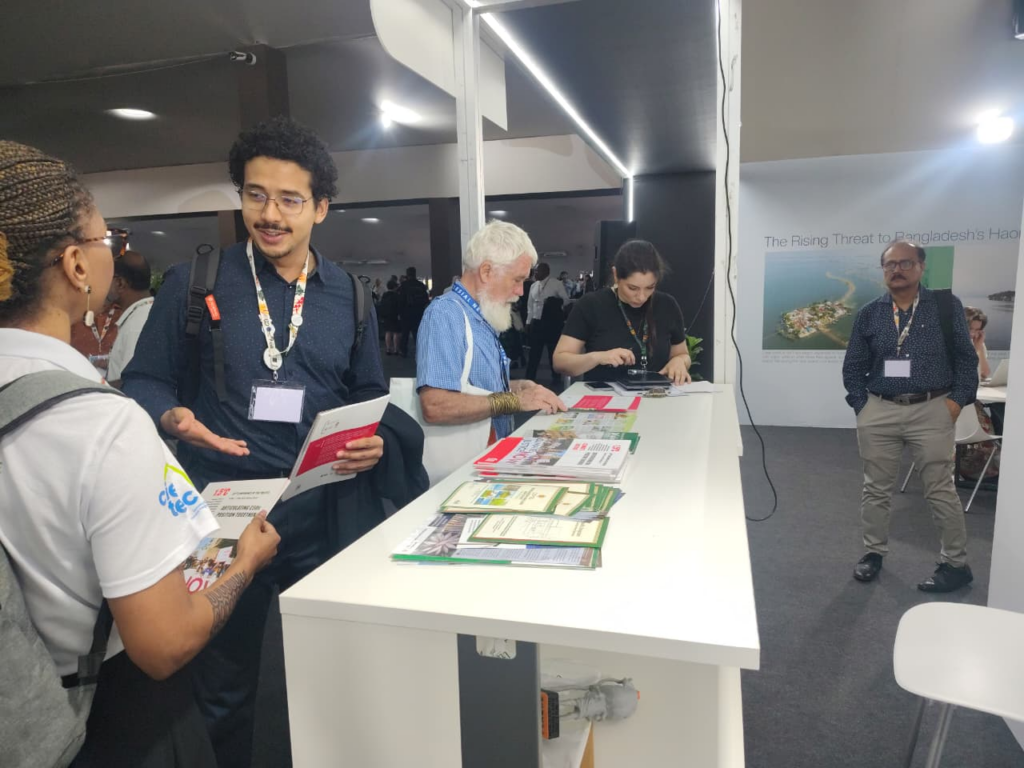
Photo:Bangladesh Pavilion
The deeper problem is climate finance itself. The debate over whether compensation comes as grants or loans matters enormously. Loans still have to be repaid with interest, and they are sometimes miscategorised, a road construction loan dressed up as climate finance is not climate finance. Negotiators have grown so frustrated that many are simply pushing for lower interest rates and longer repayment terms. It has become that difficult.
How effective was Bangladesh’s participation at COP30 itself? From my organisation’s perspective, we successfully disseminated our ground-level research findings on a global platform. That is what we can do as observers, we can influence, but the ultimate power lies with government party delegates.
On the government side, the party head was the Fisheries and Livestock Minister; the Climate Minister did not attend. Bangladesh’s national pavilion, the space meant to represent the country’s climate vulnerability on the world stage, sat empty for three or four days. There were also empty seats in negotiation rooms. Our negotiators work very hard, but the sheer number of parallel sessions makes adequate coverage very difficult with limited manpower.
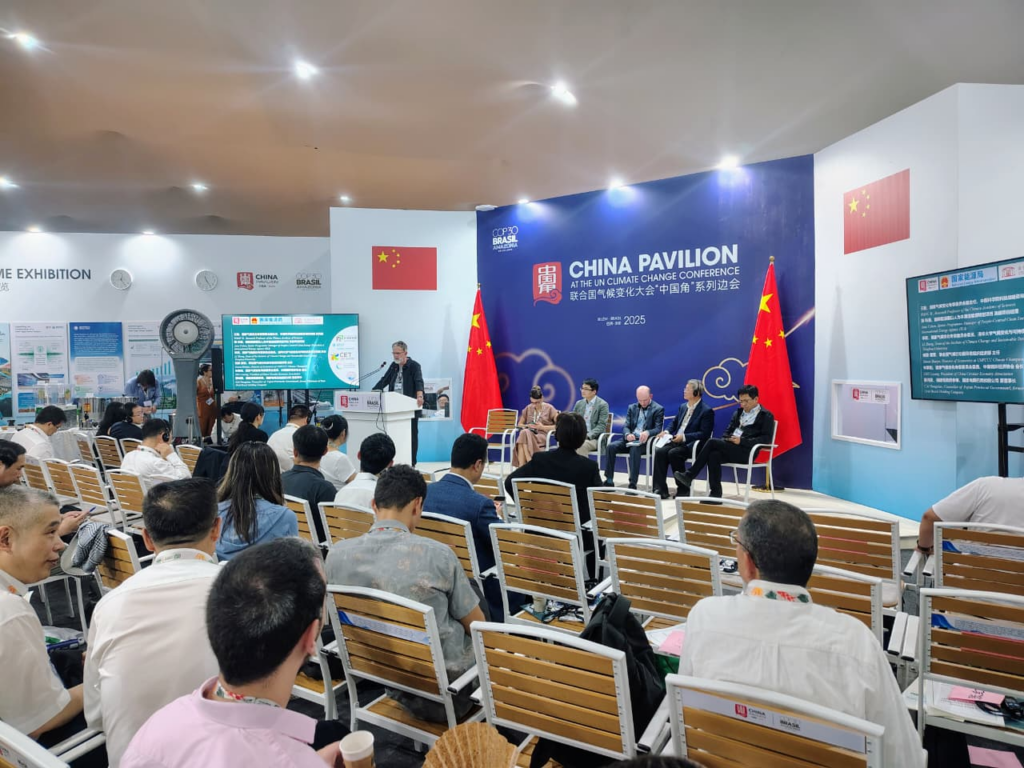
Which countries had the greatest influence at COP30? China had the largest presence. In the absence of the United States, China effectively claimed COP30, promoting its green and renewable energy initiatives and positioning itself as a responsible climate actor. It read partly as a strategic move to fill the leadership vacuum.
Saudi Arabia explicitly refused to commit to phasing out fossil fuels. China and India both vetoed the phasing out of coal, arguing that developed nations built their prosperity through their own resources and developing countries should have the same opportunity. From a narrow national interest perspective, one can understand that reasoning, but it is LDCs like Bangladesh that bear the consequences.
The European countries generally took positive stances in negotiations, but during implementation, they often introduced rules and conditions that make accessing support very difficult. There is a gap between their rhetoric and their follow-through.
We heard that the USA did not attend COP30. What impact did that have? In short, COP is dying in the absence of the USA. Maybe in the next few years, COP might become irrelevant as the USA is the largest carbon producer and they have the biggest responsibility. If they do not attend then who should the demands be addressed to. This pushes the COP in the backfoot. On the other hand, China claimed COP30. It could be said to be a marketing strategy for them. They were spreading the news about their green energy, renewable energy, and their initiative to address climate change to establish their presence on the world stage in the absence of the USA.
What were the biggest achievements of COP30? A few things stand out. Early in the conference, country heads established a new fund for nature called the TFFF, which is a meaningful step toward putting financial mechanisms behind biodiversity protection. That had not existed before. Separately, the UNFCCC officially recognised the link between climate change and human health, which validates work like the project I presented. Even among many disappointments, those are real steps forward.
Many people argue that COP moves too slowly. Do you think the process is still effective? It is a legitimate question. From my discussions with senior negotiators who have attended since the beginning, the processes have become increasingly complicated. New financial mechanisms, new terminology, new sub-agendas accumulate with every cycle, and the requirement for full consensus on every detail slows everything down. This COP was expected to focus on implementation of previous commitments, but that did not happen. Around 110 countries submitted their Nationally Determined Contributions, which were due in September, and the aggregate of those contributions still exceeds the 1.5°C threshold. At some point, the credibility of the process depends on whether commitments are met, and at the moment, there is a serious gap.
There was controversy about road construction through the Amazon forest during COP30 preparations. How did you see that? To be honest, I personally was also curious and tried to unearth what the actual case was by talking with the locals and discussing with some native media as well. Although I don’t know portuguese, I took the help of translator apps to communicate. The truth is, the road construction and development plan was not part of the COP, this was a development plan way before. What happened was, the advent of COP may have accelerated the process. But our concern should not be that, rather we should question the negative impacts that occur in the name of development on the forests and biological resources which happened due to the road construction on Amazon forest. Due to agricultural farming, a huge amount of deforestation occurs but no one is talking about that. So, are the agricultural farms and giants turning their face away from these issues? Some say that the USA is actually making these questions of COP being hypocritical to frame it in a negative way, as they are not attending and also trying to evade the whole matter diplomatically.
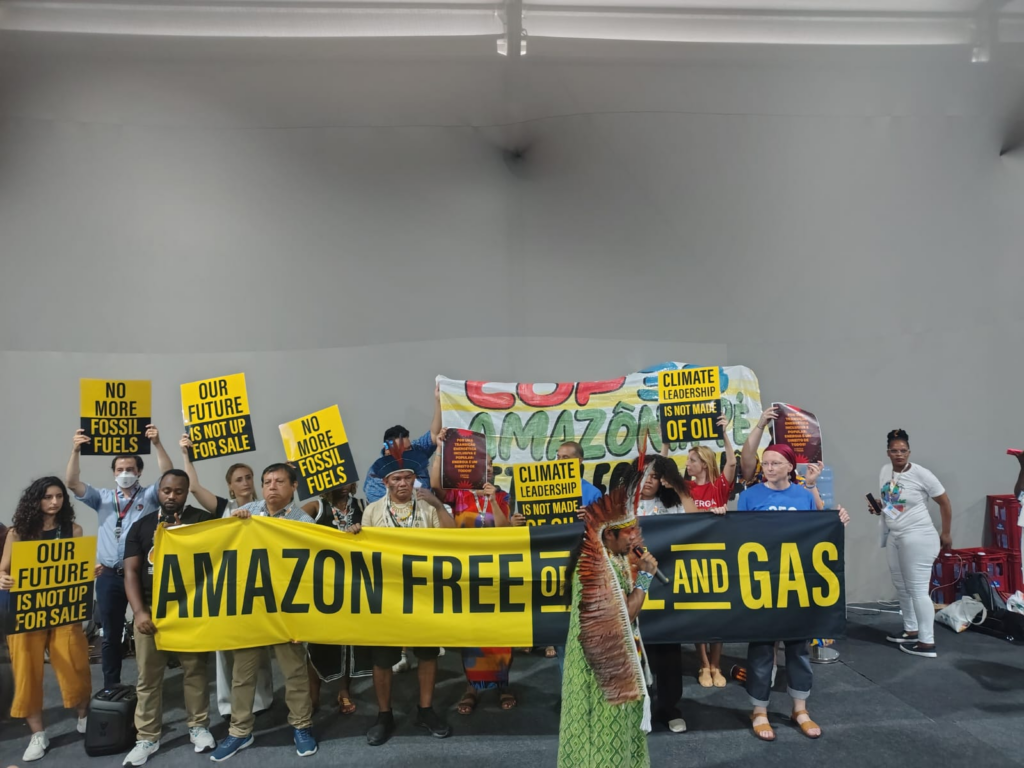
Photo: Amazonian indigenous activists protesting against fossil fuels at COP30
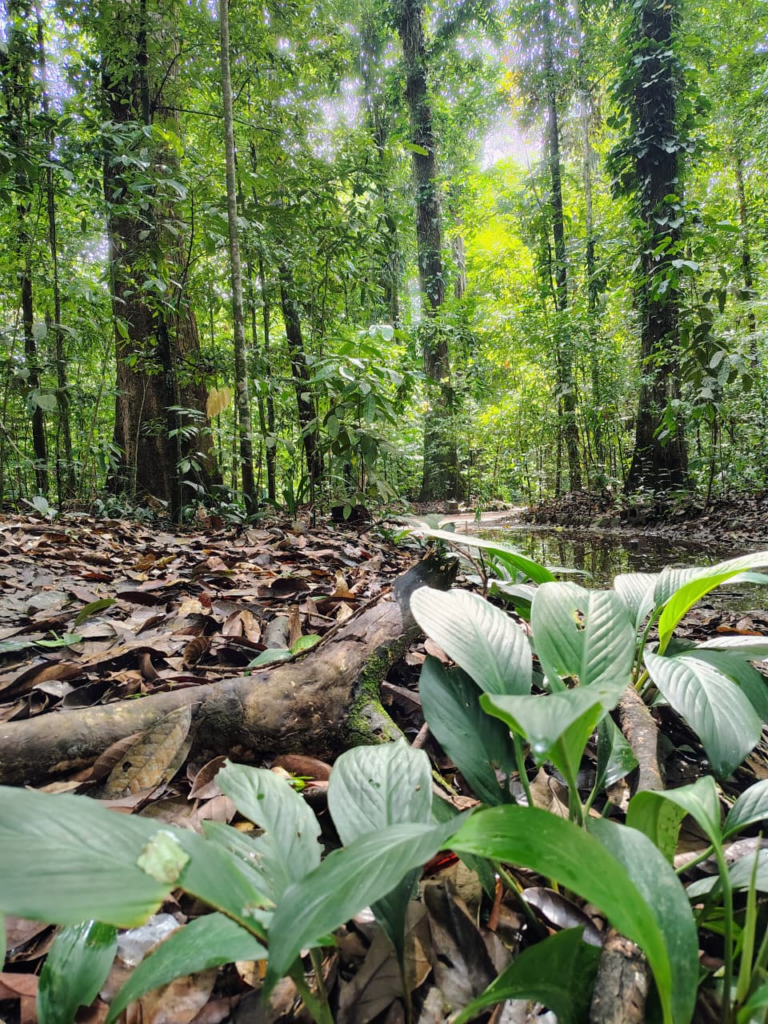
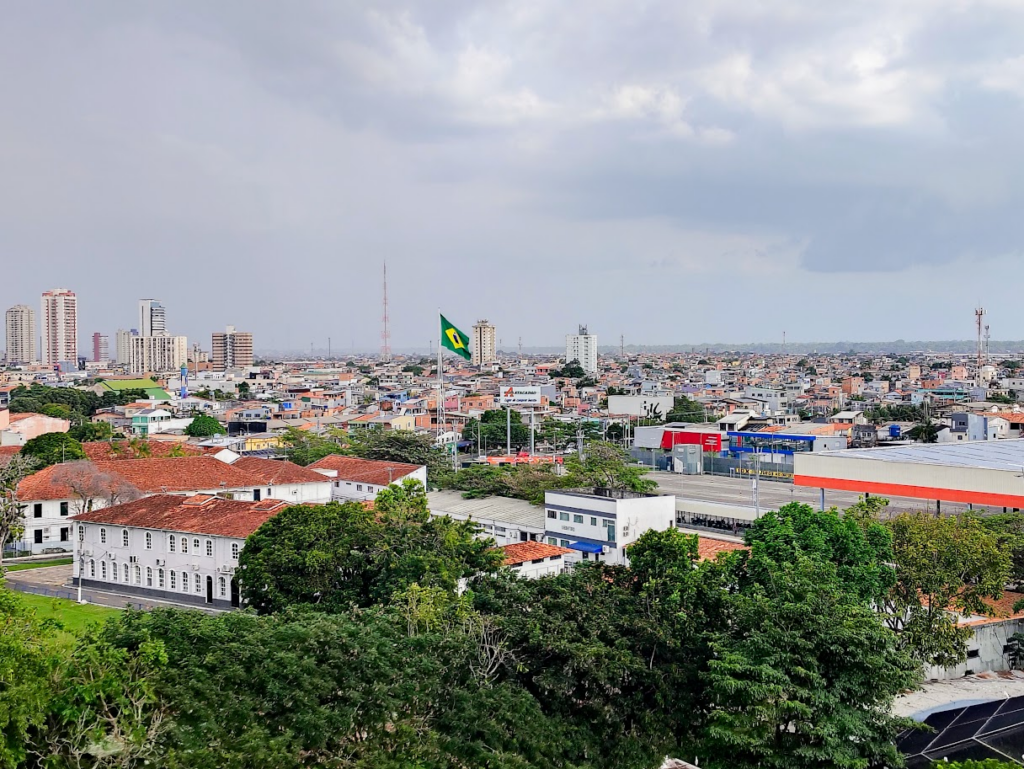
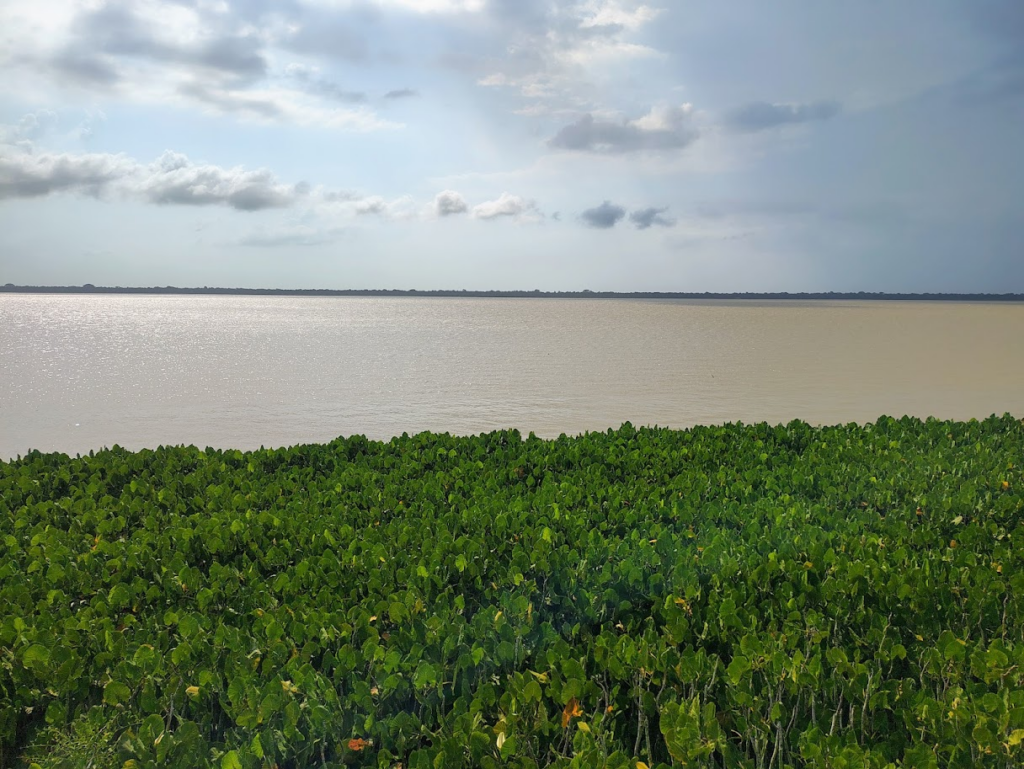
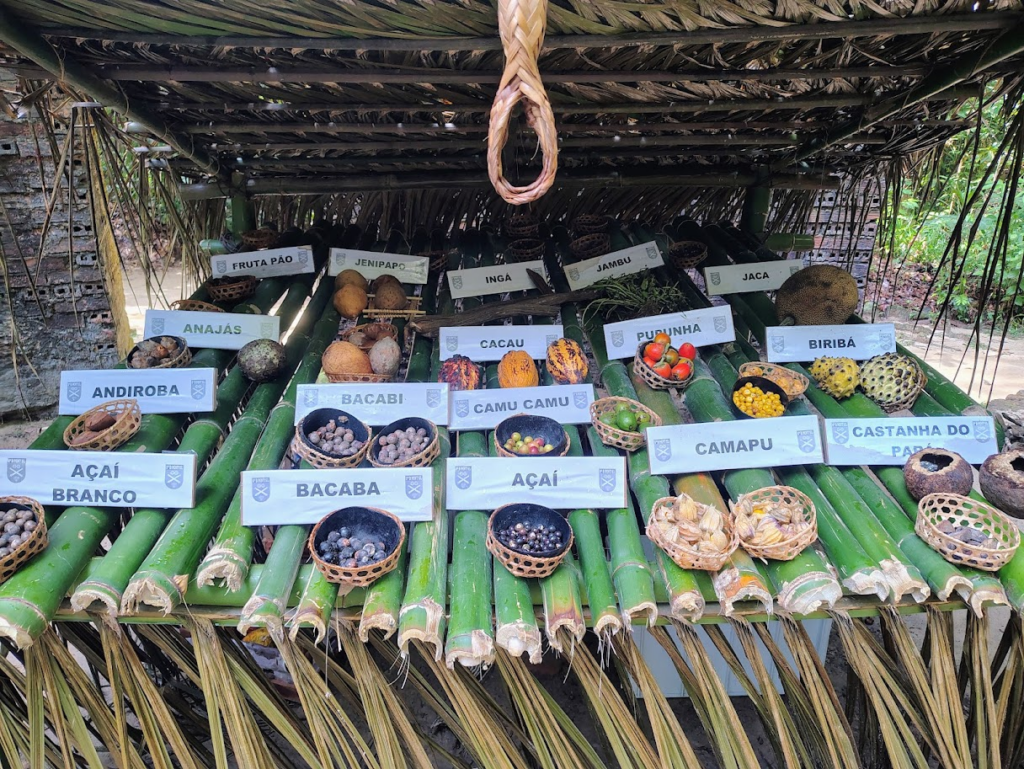
How was your personal experience in Brazil? Brazil is an amazing country and the people are very hospitable. Before going there, I actually heard several negative things about Brazil, people’s phones getting stolen during the world cup and so on. But even at 1AM I walked around and never felt unsafe. As there was a huge program going on, they were keeping the place very lively and obviously there were security protocols everywhere. As a country, Brazil is quite amazing and very vibrant and colorful. One of my targets was to visit the Amazon as we’ve all grown up reading and hearing stories about the Amazon forest. I was lucky enough to witness it through my eyes and watching the birds and large trees makes you think that this really is the lung of the earth. Also the COP was held in Belém city and it is called the “Gateway to the Amazon” which was named by the Portuguese. They used to enter the Amazon through the Atlantic and most likely this was the first Latin colony which was conquered by Portuguese first which they did to acquire wood for their ship building activities. When I walked around the streets of the city and wondered about the history of the city, it really was an amazing experience to see such a different city from my own. I am grateful to Allah for giving me this opportunity to visit such a place and witness it with my own eyes.
Finally, how can students or young people get involved in future COPs? There are several routes. Various youth-led organisations offer fellowships specifically to support young people who want to attend COP. There are also open calls where, if selected, travel and logistics are covered. Climate activists often attend through their own fund-mobilisation networks. My main advice would be to actively look for existing fellowship opportunities, they are competitive but accessible, and they are the most direct path for students for getting involved with COPs.